Design the ships
Most strategy games treat a warship as a unit. Here, a ship is the sum of decisions you made years earlier - made in three workshops, each feeding the next.
Forge the guns
Design starts with the gun: calibre, barrel length, construction, propellant, shell and charge, each choice feeding a ballistics model that produces real muzzle velocities, barrel life, and armour penetration by range. A finished gun becomes a saved design - a 12"/45 Mark X your navy can manufacture, improve, and build into mountings.
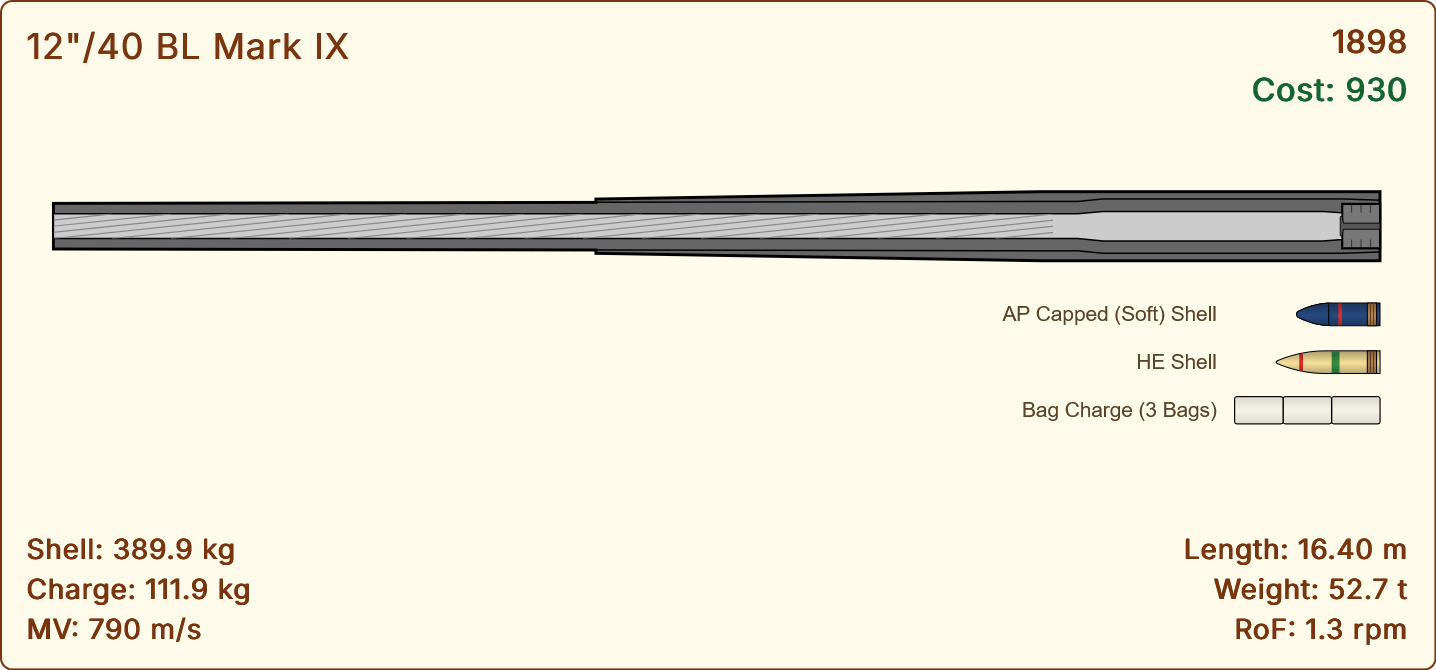
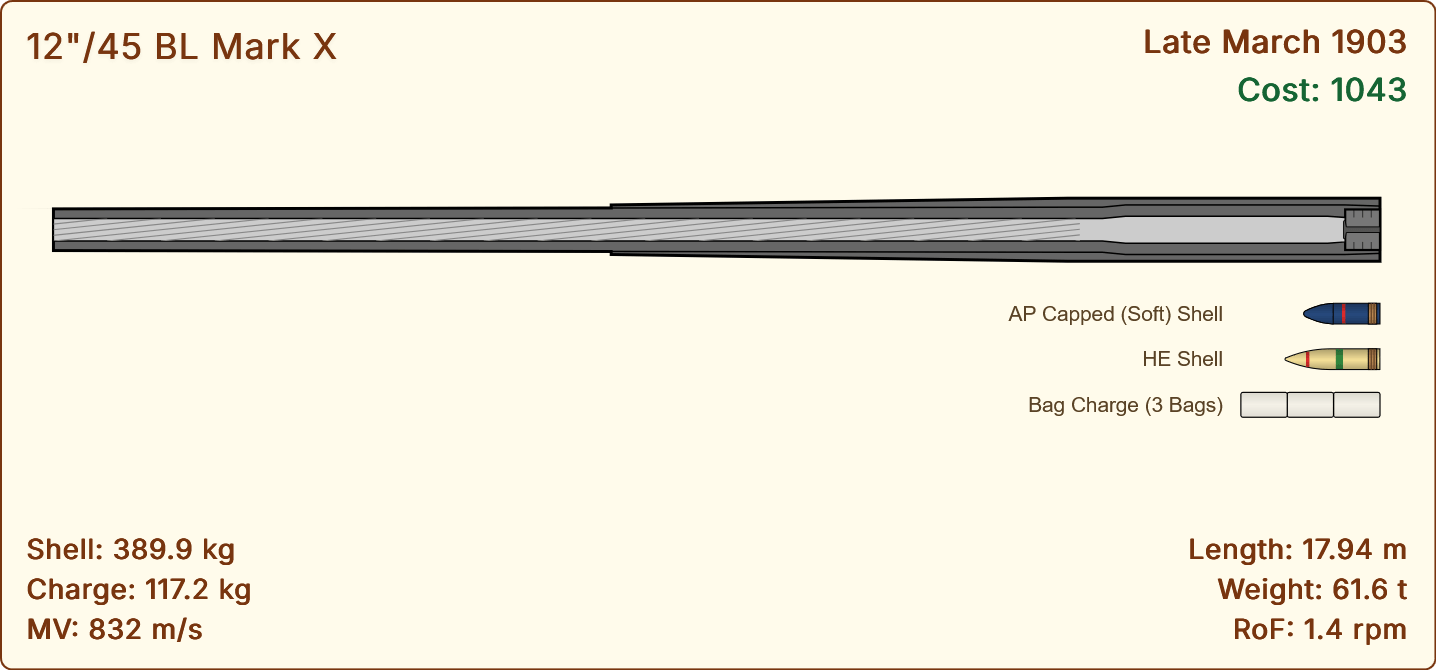
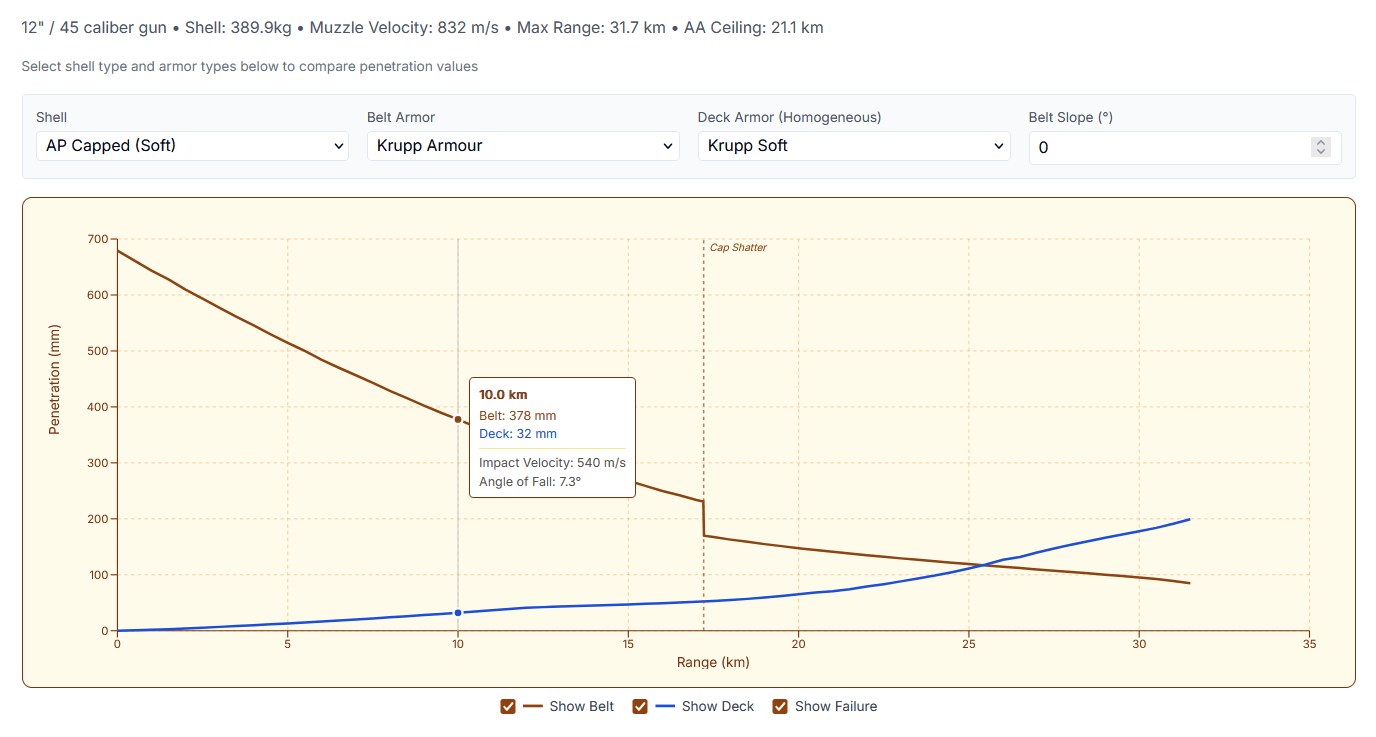
Want the full story of a single gun, from forge to fleet? Read the gun-designer devlog, This Is My Naval Rifle.
Assemble the turrets
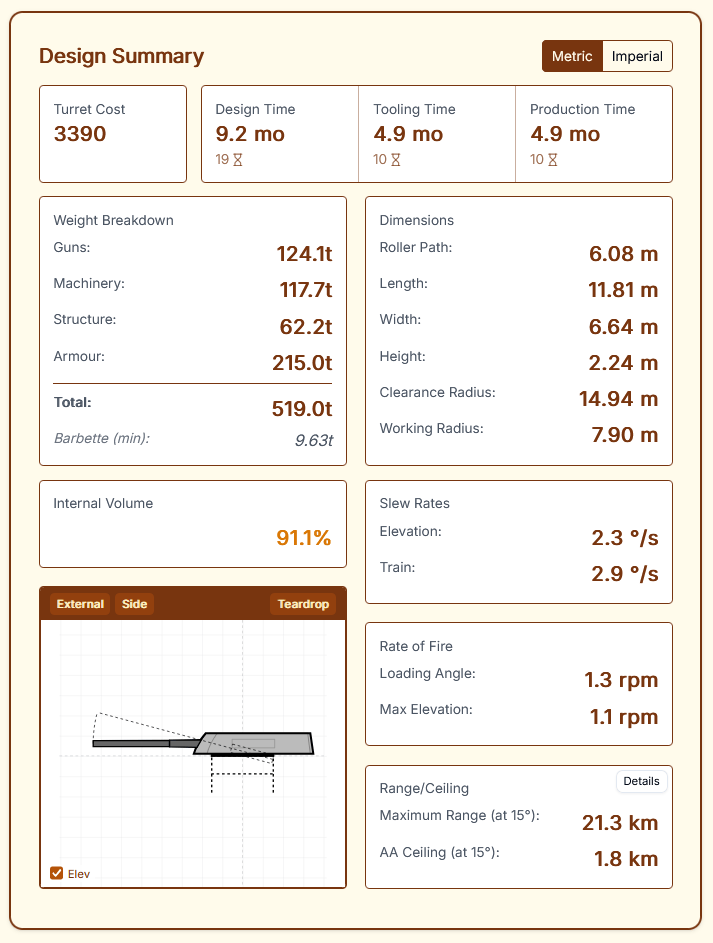
Guns then need mounting. The turret designer wraps them in armour and machinery: mount type, drive, loading system and angle, magazines and ready racks, every choice playing out in traverse and elevation rates, rate of fire, crew, and weight. A turret is an engineered object in its own right - and its weight, cost, and barbette diameter are inherited by every ship that carries it.
Draft the hulls
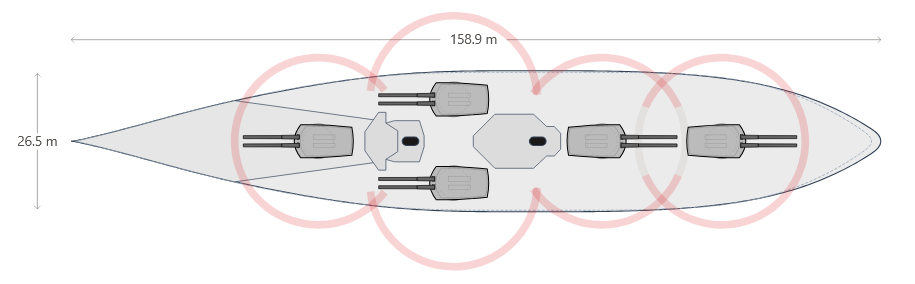
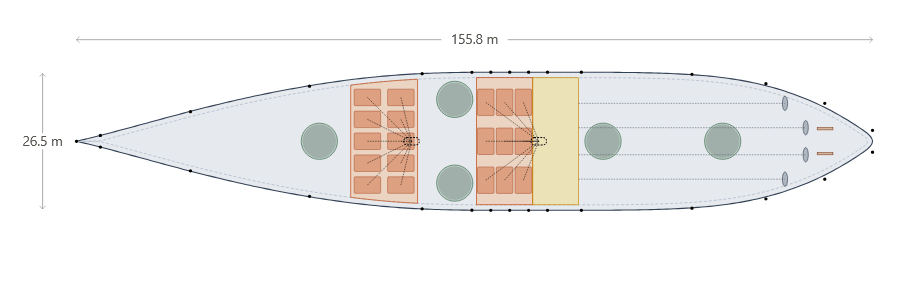
Last comes the ship itself, drawn as a real object: hull form and freeboard, machinery and boiler rooms, subdivision, superstructure, armament layout and firing arcs, armour scheme - all balanced against displacement, stability, and the budget. The designer works in real hydrostatics, so a fast, well-armed, well-protected ship on a small displacement is just as impossible as it was for the real design boards.
Improve the gun, and the improvement cascades up through every mounting and ship that uses it. The result is a navy with a paper trail: every class in your fleet can be traced back through the decisions - and compromises - that produced it.
These three workshops - gun, turret, hull - are the whole of the first free public build: the foundation, playable first.